
Independent Living, Assisted Living, and Memory Care: What is the Difference?
November 11, 2026 | Family Guides & Checklists
Maybe you have started looking into senior living and keep seeing the same terms.
Independent living. Assisted living. Memory care.
You may have a general idea of what they mean, but still wonder what an ordinary day would look like. Would your mom have her own living space? Could your dad get help getting ready in the morning? How would a community support someone whose memory changes are making familiar routines more difficult?
Understanding the differences can make those questions easier to explore.
The starting point is your loved one’s everyday life: what they enjoy, what is working well and where additional support might help. Each option serves different preferences and needs, and none is inherently better than another.
Why Can Senior Living Terms Be Confusing?
Families often encounter several unfamiliar terms before they understand what those options mean in practice. You may also see abbreviations such as IL for independent living, AL for assisted living and MC for memory care.
These names describe broad categories. Exact services, living spaces, staffing and costs vary by community. Two communities offering assisted living, for example, may provide different kinds of assistance.
Not every community offers all three options, and people do not necessarily move through them in a set order. The descriptions below explain what each care level generally offers. Services vary by community. We’ll also share the options available at The Landmark Center in Stuart, Virginia.
What Is Independent Living?
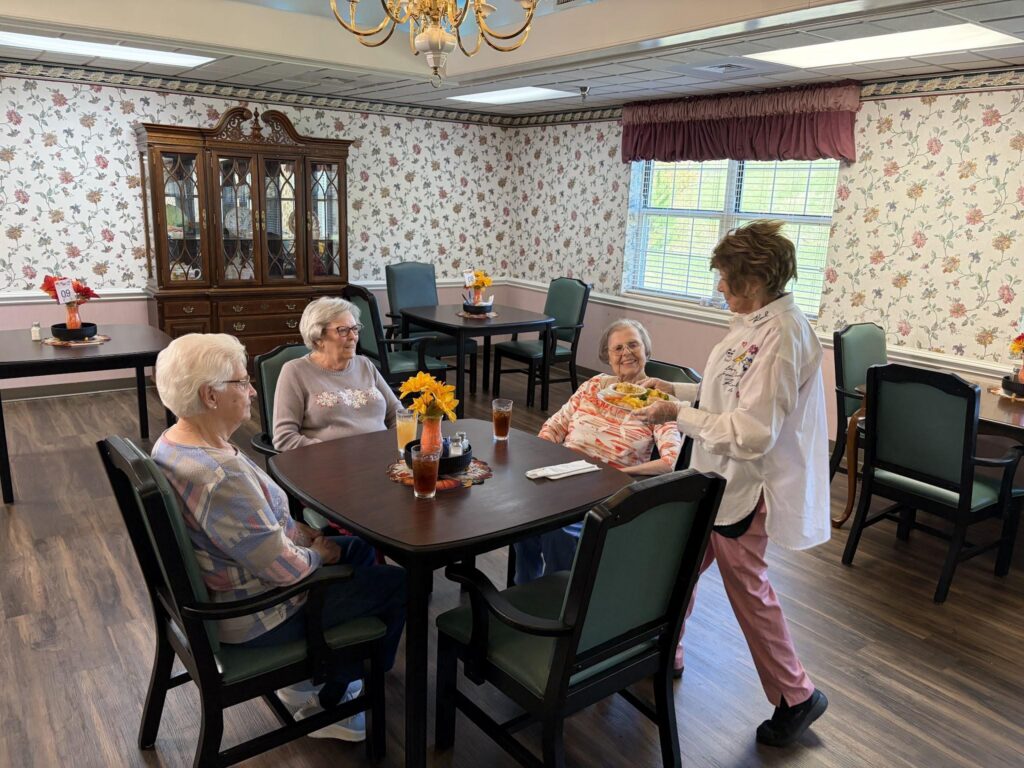
Independent living is a residential lifestyle that combines a private living space with conveniences and opportunities for connection. It is generally intended for older adults who do not need routine, hands-on assistance with personal care.
Depending on the community, residents may live in apartments or cottages and have access to dining, home maintenance, housekeeping, transportation and activities.
Someone might consider independent living because they want fewer household responsibilities or more opportunities to spend time with others. They may still enjoy preparing breakfast, driving to see friends and planning their own day.
Think about your dad wanting to leave lawn care behind while keeping his morning coffee routine and weekly card game. Independent living could be worth exploring.
Ask which conveniences are included, which cost extra and what happens if personal care needs change.
What Is Assisted Living?
Assisted living combines residential community life with personalized assistance with daily activities. The goal is to provide helpful support while preserving choice, familiar routines and independence.
Depending on the community and the person’s care plan, assistance may include bathing, dressing, grooming, using the restroom, moving around or managing medications. Meals, housekeeping and social activities may also be available.
Support does not have to look the same for everyone.
Your mom might appreciate help with bathing but prefer to choose her clothes and get dressed herself. Someone else may need medication assistance while continuing to enjoy hobbies and outings.
Assisted living may be worth exploring when regular personal care assistance would make daily life easier. Ask how the team learns about residents’ preferences, develops care plans and adjusts support when circumstances change.
What Is the Difference Between Independent Living and Assisted Living?
The main difference is routine personal care support. Independent living generally focuses on convenience and community life for people who manage their personal care independently. Assisted living provides individualized help with daily activities.
Both may offer private living spaces, dining and opportunities for connection. Those shared features can make the options look similar during a tour.
Look beyond the amenities. Ask whether your loved one needs someone to help with personal tasks regularly, and whether that specific assistance is available. Independence can include making choices and doing what you can yourself while accepting help where it is useful.
What Is Memory Care?
Memory care provides specialized support for people living with Alzheimer’s disease or other forms of dementia. It combines daily assistance with an approach that considers how changes in memory and thinking affect everyday life.
Support may include predictable routines, gentle reminders, staff trained in dementia care and meaningful activities adapted to individual interests and abilities. Environments may have features designed to help residents navigate their surroundings and reduce risks associated with becoming lost.
The person remains at the center.
Someone who has always enjoyed gardening may appreciate watering plants. A favorite song, familiar photographs or time with a trusted friend can create opportunities for connection.
Memory care may be worth exploring when dementia-related changes call for specialized daily support. Ask how the community honors each person’s history, supports relationships and balances safety with choice.
What Is the Difference Between Assisted Living and Memory Care?
Assisted living focuses on personalized assistance with daily activities. Memory care adds specialized dementia support through staff training, adapted engagement, routines and environmental features.
The distinction is about the kind of support someone needs, rather than simply how much help they receive. Both options may assist with dressing or meals, but memory care also considers how memory changes affect communication, participation and safety.
A diagnosis alone does not tell your family which setting to choose. Discuss your loved one’s daily experience with their healthcare provider and ask communities how they assess whether their services can meet your loved one’s needs.
How Do Daily Life and Support Differ?
These general descriptions offer a starting point for comparison. They are not guarantees about every community’s services.
| What to compare | Independent living | Assisted living | Memory care |
|---|---|---|---|
| Typical living experience | Private residence with conveniences and social opportunities. | Residential community life with personalized daily support. | Residential setting with routines and engagement adapted for dementia. |
| Daily assistance | Routine hands-on personal care is generally not included. | Help with personal activities based on assessed needs. | Help with daily activities, with reminders and support adapted to memory changes. |
| Memory-specific support | Generally not a specialized dementia program. | Capabilities vary; ask about dementia support and limits. | Specialized staff training, adapted activities and safety features. |
| Questions to ask | What is included? What if care needs change? | How is care personalized? What assistance can you provide? | How do you support choice, relationships and safe movement? |
Which Option Might Be Worth Exploring?
As you explore the options, begin with what matters most to your loved one. Include them in conversations in ways that support their participation and choices.
Consider asking:
- What matters most in your daily routine?
- What is working well now?
- Where would additional support help?
- Are memory changes affecting daily life or safety?
- What would you want from a community?
Listen for what is behind the answer. Your dad may want fewer chores but value privacy. Your spouse may welcome personal care assistance while wanting to keep a familiar bedtime routine.
Bring those details to community conversations. Ask what a typical day could look like, how residents express preferences and what support is available if needs change. Discuss included services and additional fees so your family can understand the full cost.
You do not need to decide immediately. Learning about an option can simply help you ask more informed questions.
Where Does Respite Care Fit?
Respite care offers temporary support, often through a short stay while a family caregiver rests, travels or attends to other responsibilities. Some communities also offer stays that allow someone to experience community life.
Respite describes temporary care; short-term rehabilitation focuses on recovery through skilled services such as physical, occupational or speech therapy. One does not automatically include the other.
Ask about available assistance, stay lengths and admission requirements. If rehabilitation is needed, confirm those services separately.
Which Options Are Available at The Landmark Center?
The comparison above describes senior living in general. The Landmark Center in Stuart, Virginia, offers several care options to help families find support that aligns with their loved one’s needs and preferences.
Assisted living at The Landmark Center combines personalized support with opportunities for residents to maintain their independence and continue enjoying their daily routines. Residents can receive assistance with everyday activities, including bathing, dressing, medication management and housekeeping, while enjoying chef-prepared dining, comfortable gathering spaces, outdoor gardens and courtyards, and opportunities for social engagement. Staff are available 24 hours a day.
For individuals living with Alzheimer’s disease or other forms of dementia, Serenity Memory Care provides specialized support in a secure environment designed to promote safety, engagement and individuality. Specially trained team members develop personalized care approaches that reflect each resident’s history, interests, preferences and abilities.
The Landmark Center also offers respite care for older adults who may benefit from temporary assistance. Short-term guests receive personalized support based on their individual needs while enjoying private accommodations, meals, housekeeping, activities and access to community amenities throughout their stay.
Exploring these options doesn’t mean your family has decided a move is the next step. It can simply be an opportunity to ask questions, learn about available services and better understand which level of support may be appropriate for your loved one.
Not sure where to begin? Contact The Landmark Center team to discuss your loved one’s needs, explore available care options and learn more about daily life at The Landmark Center.
The Landmark Center is a senior living community in Stuart, Virginia, offering assisted living, Serenity Memory Care and respite care. Residents have access to personalized support, 24-hour staff, restaurant-style dining, engaging activities and wellness programs, and inviting indoor and outdoor gathering spaces, including gardens and courtyards. Located in Patrick County, The Landmark Center provides different levels of support while helping residents maintain independence, connection and choice in everyday life.
Where to Find Us

Phone
Hours
Open 24 hours